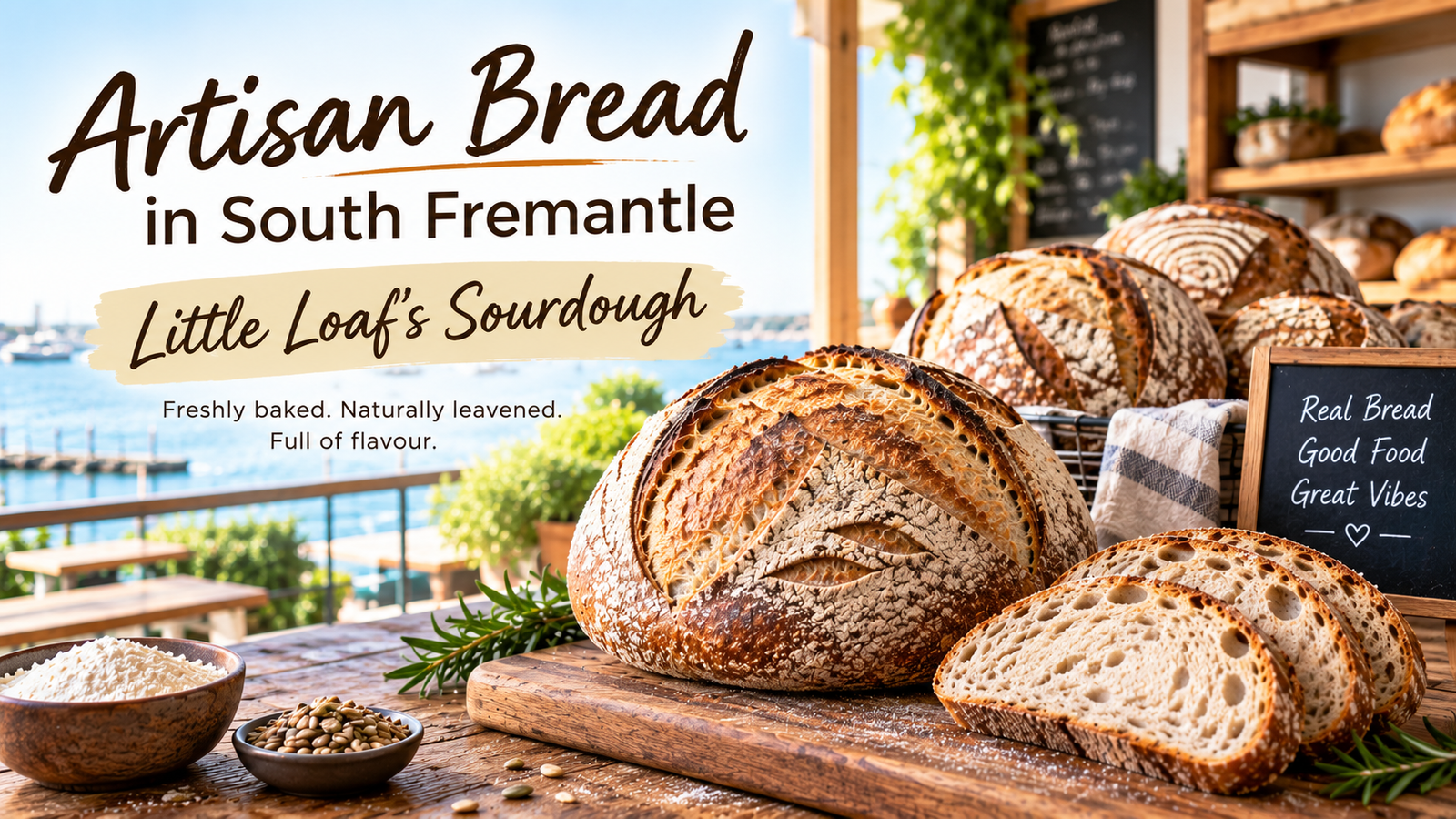
Artisan Bread in South Fremantle: Little Loaf's Sourdough
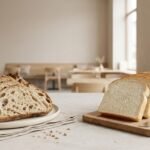
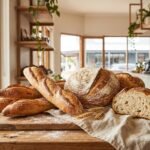
Artisan bread is made slowly, with few ingredients and no shortcuts — a long natural fermentation instead of commercial yeast, hand-shaping instead of machine moulding, and a bake that develops real crust and flavour. In South Fremantle, that describes what comes out of the oven at Little Loaf every morning on South Terrace.
South Fremantle has a strong appetite for this kind of baking. It’s a beach-and-cafe strip where people walk to breakfast, buy a loaf on the way home, and expect the bread to actually taste like something. That’s a different market to a supermarket shelf, and it demands different bread.
What "Artisan" Actually Means
The word gets used loosely, so it’s worth being specific. Genuine artisan bread generally involves:
- A long fermentation — hours, not minutes, using a wild-yeast starter (a “mother dough”) rather than fast commercial yeast.
- Minimal ingredients — flour, water, salt, and the starter culture. Nothing to extend shelf life artificially.
- Hand shaping — each loaf handled individually rather than run through a moulder.
- A hot, often steam-injected bake — this is what produces a real crust rather than a soft, uniform crumb.
None of this is decorative. Each step changes the texture, the keeping quality, and the flavour of the finished loaf.
Why the Fermentation Actually Matters
Long fermentation isn’t just tradition for its own sake — it changes the bread in ways that are genuinely measurable. Slow fermentation with lactic acid bacteria and wild yeast breaks down some of the starches and proteins in the flour before it’s baked, and it reduces phytic acid, which otherwise binds to minerals like iron and zinc and limits how well the body absorbs them.
It’s worth being honest about where the evidence is less settled. Some of the bigger claims around sourdough and blood sugar are less clear-cut than marketing often suggests — a lot of published sourdough research relies on lab and in-vitro analysis rather than data showing a measurable clinical effect in people, and reviews of the human trials have found the results inconsistent. So: the fermentation chemistry is real and well documented. The bigger health claims are still being tested. What isn’t in dispute is the effect on flavour, crust, and shelf life — that part shows up every time you cut into a properly fermented loaf.
The South Fremantle Bread Scene
Fremantle has one of Perth’s stronger bakery cultures, and South Fremantle in particular runs on foot traffic — the beach, the cafe strip, and a local crowd that treats the corner bakery as part of the daily routine rather than an occasional treat. That means the bread has to hold up two ways: good enough for a Saturday morning sit-down, and sturdy enough to survive being carried home for lunch.
What's Actually in the Oven at Little Loaf
Little Loaf is a working bakery and lunch bar on South Terrace, and the bread list reflects a proper program rather than one hero loaf:
- Sourdough varieties — including the Cott Sour, Ancient Sour, and the Freo Sour, alongside a Country Rye for something denser and more savoury.
- Shaped loaves — Baguette, Epi, and Fougasse for people after a specific shape and crumb rather than a standard sandwich loaf.
- Everyday loaves — a White Block Loaf and Big Loaf for households that just need reliable bread that toasts well.
- Pastry and viennoiserie — croissants, pain au chocolat, and almond croissant baked fresh alongside the bread.
The bread doesn’t stop at the loaf either — it goes straight into the kitchen for banh mi rolls, sandwiches, and the counter menu, so what’s baked in the morning is what’s on the plate by lunch.
Visiting Little Loaf
- Address: 2/390 South Terrace, South Fremantle
- Phone: 08-9336-4472
- Order online or browse the full menu: littleloaf.com.au
Ordering ahead is a good idea on weekend mornings, when the South Fremantle brunch crowd is out in force.
How to Tell Good Artisan Bread From the Marketing Version
A few practical checks, if you’re comparing bakeries:
- Look at the crust. A genuinely long-fermented loaf has an open, sometimes uneven crust with real colour variation — not a uniform golden shell.
- Check the crumb. Irregular holes and a slightly chewy texture are signs of real fermentation, not a flaw.
- Ask how long it takes. If a bakery can tell you their sourdough ferments for many hours (often overnight), that’s a good sign. “It’s made fresh daily” alone doesn’t tell you much — fast bread is also made fresh daily.
- Taste the tang. Some sourness is expected, but it shouldn’t be the only flavour. Good sourdough should still taste like wheat.
FAQ's
1. What makes bread "artisan" rather than just fresh?
Artisan bread involves a long natural fermentation, hand shaping, and minimal ingredients — freshness alone doesn’t guarantee any of that. A loaf baked that morning from fast commercial yeast is fresh, but it isn’t artisan in the traditional sense.
2. Is sourdough bread actually easier to digest?
The long fermentation does break down some starches and proteins and lowers phytic acid, which is well documented in food-science research. Whether that translates into a noticeable digestive difference varies by person, and clinical evidence on broader health claims is still mixed — anyone with a diagnosed digestive condition should talk to a health professional rather than rely on bread choice alone.
3. Where can I get fresh artisan bread in South Fremantle?
Little Loaf bakes a daily sourdough range — including the Cott Sour, Ancient Sour, Freo Sour, and Country Rye — from its South Terrace location in South Fremantle. The bread is baked fresh each morning and used across the café’s own sandwich and roll menu.
4. How should I store artisan sourdough to keep it fresh?
Keep it cut-side down at room temperature in a paper or linen bag for a day or two, and freeze whole or sliced for longer storage. Plastic bags trap moisture and soften the crust faster than paper does.
5. Does artisan bread cost more than supermarket bread, and why?
Yes, generally — the longer fermentation time, hand shaping, and smaller batch sizes all take more labour and time than commercial production. You’re paying for the process as much as the ingredients.